THE DECISION TO DROP THE ATOMIC BOMBS ON JAPAN
|
|
|
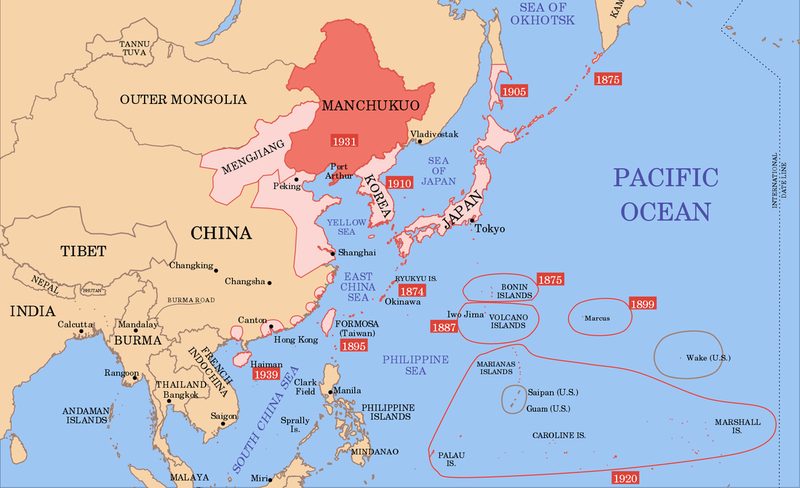
On the 8th of May 1945, Nazi Germany officially surrendered. World War II in Europe had come to an end and millions around the world celebrated VE (Victory in Europe) day. However, the war in Pacific theater was still ongoing. Japan was clearly losing the war, and American forces were closing in on the Japanese home islands, but Japanese resistance was particularly fierce and it did not appear that Japan was going to surrender in near future. American military strategist began making plans for an invasion of Japan.
However, by July 1945 Allied scientists had successfully built and tested a terrifyingly destruction new weapon- the atomic bomb. On the 6th of August 1945, the "little boy" was dropped on the city of Hiroshima and, three days later, "fat man" was dropped on Nagasaki. On the 15 of August, Japan announced its surrender. |
|
Was Truman justified in his decision to drop the bombs on Japan?
Yes,he was.
|
A US invasion of the Japanese home islands could have significantly lengthened the war and have caused an unacceptable number of both U.S. and Japanese casualties.
As American forces discovered at the battles of Iwo Jima and Okinawa, the fighting was getting fiercer as the US approached Japan. US Military casualty estimates for the invasion of Japan varied from 500,000 to 2,000,000 men. The estimated completion date for such an invasion (commencing in July 1945) varied between 1946 and 1947. These estimates were based on the invasions of Iwo Jima and Okinawa. US Army sustained 26,000 casualties during on Iwo Jima and 75,000 casualties on Okinawa. Moreover Between April and July 1945, the USA sustained nearly half of the casualties inflicted upon it by the Japanese in three years of fighting. |
|
Additionally, kamikaze attacks increased as Japanese strategy aimed at creating an unacceptable number of US casualties. According to historian Alonzo L. Hamby in “Man of the People”, Truman was motivated by the thought of more US servicemen dying.
|
|
Japan had no intention of surrendering.
In “A Democracy at War”, William O' Neill stated that the Japanese military had no intention of surrendering and had every intention to fight until the last man, woman and child.
As evidence for this, O' Neill cites that 94% of 117,000 Japanese troops died defending Okinawa. Japan continued to fight even after 100,000 people (mostly civilians) died during Operation Meetinghouse, a firebombing raid on Tokyo between the 9th and 10th of March 1945 and as US air forces continued to heavily bomb Japan (until 15th of August 1945), disrupting industrial production. When one considers that a US naval blockade was also in place, it does indeed appear that the Japanese government were set upon fighting until the very last person. According to Richard Frank in “Downfall: The End of the Imperial Japanese Empire”, the use of the atom bomb saved Japanese lives too.
In “A Democracy at War”, William O' Neill stated that the Japanese military had no intention of surrendering and had every intention to fight until the last man, woman and child.
As evidence for this, O' Neill cites that 94% of 117,000 Japanese troops died defending Okinawa. Japan continued to fight even after 100,000 people (mostly civilians) died during Operation Meetinghouse, a firebombing raid on Tokyo between the 9th and 10th of March 1945 and as US air forces continued to heavily bomb Japan (until 15th of August 1945), disrupting industrial production. When one considers that a US naval blockade was also in place, it does indeed appear that the Japanese government were set upon fighting until the very last person. According to Richard Frank in “Downfall: The End of the Imperial Japanese Empire”, the use of the atom bomb saved Japanese lives too.
“Nobody is more disturbed over the use of atomic bombs than I am but I was greatly disturbed over the unwarranted attack by the Japanese on Pearl Harbor and their murder of prisoners of war. The only language they seem to understand is the one we have been using to bombard them…When you have to deal with a beast you have to treat him as a beast. It is most regrettable but nevertheless true.” |
|
No, he wasn't.
|
Japan would have eventually surrendered. Military advisors had informed Truman that Japan was a defeated nation and that the US blockade would have forced a Japanese surrender by late 1945/early 1946. Moreover, 3 Million Japanese soldiers were stranded in China and could not defend their homeland. Senior military commanders (Eisenhower, MacArthur, Leahy, Nimitz, LeMay) all opposed the use of the atom bomb and felt that the US was surrendering its moral high ground. |
|
|
|
The real intention of the bomb was to send a message to the Soviet Union.
The USSR had previously agreed to join the war within 90 days of the end of the war in Europe and did so exactly on schedule; they invaded Manchuria on the 9th of August 1945. Aware of the impending Soviet invasion of Manchuria, some historians claim that Truman engaged in “atomic diplomacy” by dropping the bomb. This was a message designed to keep the USSR out of Asia and to warn them of their nuclear capabilities.According to the US Strategic Bombing Survey Report, the US naval blockade would have forced Japanese surrender by November 1945.
In “Atomic Diplomacy”, Gar Alperowitz claimed that the Truman administration knew the bombs were unnecessary and were trying to intimidate the USSR. Additionally, Soviet Historian Vadim Nekrasov in “The Roots of European Society” argued the US were trying to show its power to the world, especially the USSR. This argument was also used by Japanese historian Tsuyoshi Hasegawa in “Racing the Enemy: Stalin, Truman and the Surrender of Japan". He said that Truman used the bomb to win the war without Soviet assistance and therefore limit their expansion into Asia. He also claims that Soviet entry into the Pacific conflict had the greatest impact on Japan’s decision to surrender.
The USSR had previously agreed to join the war within 90 days of the end of the war in Europe and did so exactly on schedule; they invaded Manchuria on the 9th of August 1945. Aware of the impending Soviet invasion of Manchuria, some historians claim that Truman engaged in “atomic diplomacy” by dropping the bomb. This was a message designed to keep the USSR out of Asia and to warn them of their nuclear capabilities.According to the US Strategic Bombing Survey Report, the US naval blockade would have forced Japanese surrender by November 1945.
In “Atomic Diplomacy”, Gar Alperowitz claimed that the Truman administration knew the bombs were unnecessary and were trying to intimidate the USSR. Additionally, Soviet Historian Vadim Nekrasov in “The Roots of European Society” argued the US were trying to show its power to the world, especially the USSR. This argument was also used by Japanese historian Tsuyoshi Hasegawa in “Racing the Enemy: Stalin, Truman and the Surrender of Japan". He said that Truman used the bomb to win the war without Soviet assistance and therefore limit their expansion into Asia. He also claims that Soviet entry into the Pacific conflict had the greatest impact on Japan’s decision to surrender.
|
|
There were other factors behind the decision to drop the bombs.
- The bomb had cost $2 billion to develop and Truman felt he needed some sort of return on this investment
- Truman was aware of attempts by the Japanese government to strike a peace deal with the USSR
- Truman wanted to avenge the deaths at Pearl Harbor
- Truman’s decision was racist