THE COURSE AND PRACTICES OF WORLD WAR II
1939-40
The invasion of Poland and the Phoney War (September 1939-May 1940)
Poland was successfully invaded in little under a month, largely because of Germany's blitzkrieg strategy but also because of the failure of Britain and France to assist them. Although, Britain and France declared war on Germany two days after the attack on Poland started, there was minimal effort to defend them. What made this situation worse was that the Polish strategy depended on British and French support. Poland was subsequently divided in accordance with the Nazi-Soviet Pact. During the invasion, there were plenty of atrocities were committed by all sides including the notorious Katyn Forest Massacre where 22,000 Poles were executed by Soviet forces.
The period between the invasion of Poland and May 1940 is known as the Phoney War because very little military activity took place. The main exception to this was the Winter War when the USSR, in an attempt to extract territorial concessions from Finland, launched an invasion. A peace agreement was reached in March 1940 where the Soviets gained 11% of Finnish territory.
The invasions of Denmark, Norway, the Low Countries and France (April-June 1940)
Iron ore from Sweden (who was neutral) was crucial to the German war effort. Britain realised this and began to make an effort to prevent Germany from importing Swedish iron ore. In order to protect this trade, Germany took the decision to take control of Norway. This would also give the Germans good
access to the Atlantic Ocean , prevent a British naval blockade similar to the one in World War and put northern Britain in range of its bombers. Therefore, in order to successfully take control of Norway, an invasion of Denmark was necessary. Denmark was overrun in a matter of hours on the 9th April 1940 while most of Norway was under German control within a week. The important northern port of Narwik was the last place to resist German forces (with help from British, French and Polish troops) but eventually fell in June.
Once it was clear Norway would fall, the Germans decided to focus on France and the Low Countries. Although the Allies had numerical superiority with regard to troops, tanks and artillery, there were two areas where Germany had a clear advantage which would prove to be decisive. These were aircraft and tactics. Blitzkrieg required good communications to co-ordinate between aircraft, tanks and infantry in order to advance rapidly into enemy territory. Once Germany seized control of the air, they bombed important strategic targets such as bridges and airfields. All these countries were defeated within 6 weeks. Northern France and the Atlantic coast were directly controlled by Germany but southern and eastern France was given nominal independence and controlled by a government set up in the town of Vichy, although in reality it was a client state of Germany. One of the more remarkable operations of the war was the successful effort by the British Navy (with civilian support) to evacuate close to 300,000 British troops from the French port of Dunkirk, although the decision by Hitler not to order an attack on these troops, when German forces had a favourable offensive position, is also baffling. There is excellent dramatic recreation of the scenes at Dunkirk in the movie clip below.
The invasion of Poland and the Phoney War (September 1939-May 1940)
Poland was successfully invaded in little under a month, largely because of Germany's blitzkrieg strategy but also because of the failure of Britain and France to assist them. Although, Britain and France declared war on Germany two days after the attack on Poland started, there was minimal effort to defend them. What made this situation worse was that the Polish strategy depended on British and French support. Poland was subsequently divided in accordance with the Nazi-Soviet Pact. During the invasion, there were plenty of atrocities were committed by all sides including the notorious Katyn Forest Massacre where 22,000 Poles were executed by Soviet forces.
The period between the invasion of Poland and May 1940 is known as the Phoney War because very little military activity took place. The main exception to this was the Winter War when the USSR, in an attempt to extract territorial concessions from Finland, launched an invasion. A peace agreement was reached in March 1940 where the Soviets gained 11% of Finnish territory.
The invasions of Denmark, Norway, the Low Countries and France (April-June 1940)
Iron ore from Sweden (who was neutral) was crucial to the German war effort. Britain realised this and began to make an effort to prevent Germany from importing Swedish iron ore. In order to protect this trade, Germany took the decision to take control of Norway. This would also give the Germans good
access to the Atlantic Ocean , prevent a British naval blockade similar to the one in World War and put northern Britain in range of its bombers. Therefore, in order to successfully take control of Norway, an invasion of Denmark was necessary. Denmark was overrun in a matter of hours on the 9th April 1940 while most of Norway was under German control within a week. The important northern port of Narwik was the last place to resist German forces (with help from British, French and Polish troops) but eventually fell in June.
Once it was clear Norway would fall, the Germans decided to focus on France and the Low Countries. Although the Allies had numerical superiority with regard to troops, tanks and artillery, there were two areas where Germany had a clear advantage which would prove to be decisive. These were aircraft and tactics. Blitzkrieg required good communications to co-ordinate between aircraft, tanks and infantry in order to advance rapidly into enemy territory. Once Germany seized control of the air, they bombed important strategic targets such as bridges and airfields. All these countries were defeated within 6 weeks. Northern France and the Atlantic coast were directly controlled by Germany but southern and eastern France was given nominal independence and controlled by a government set up in the town of Vichy, although in reality it was a client state of Germany. One of the more remarkable operations of the war was the successful effort by the British Navy (with civilian support) to evacuate close to 300,000 British troops from the French port of Dunkirk, although the decision by Hitler not to order an attack on these troops, when German forces had a favourable offensive position, is also baffling. There is excellent dramatic recreation of the scenes at Dunkirk in the movie clip below.
The Battle of Britain (July-October 1940)
Hitler's next focus was Britain. He launched an air campaign with the intention of either forcing Churchill to negotiate a peace treaty or in order to gain air superiority as a precursor for a land invasion. The German Luftwaffe had success at first by targeting airfields in southeast England. This prevented the Royal Air Force from sending aircraft to attack German fighterplanes and destroyed imported fuel silos. The turning point in the Battle of Britain was the decision to target London. This relieved pressure on the airfields allowing RAF fighterplanes to get into the air and forced the Luftwaffe to fly further in order to reach their target and return to Germany, testing fuel tanks. Ultimately, the RAF were able to halt the Luftwaffe's attempts to gain air supremacy, although large scale bombing of urban areas in Britain (known as the Blitz) continued until June 1941, when Germany attempted to invade the Soviet Union. Britain responded to the Blitz by launching bombing campaigns over Germany.
"The spirit of 1940- the undoubted annus mirabilis of British history- was often to be called upon by Churchill in the remaining years of the war, and by many other politicians since."
Andrew Roberts, UK Historian, "The Storm of War" (2010)
Hitler's next focus was Britain. He launched an air campaign with the intention of either forcing Churchill to negotiate a peace treaty or in order to gain air superiority as a precursor for a land invasion. The German Luftwaffe had success at first by targeting airfields in southeast England. This prevented the Royal Air Force from sending aircraft to attack German fighterplanes and destroyed imported fuel silos. The turning point in the Battle of Britain was the decision to target London. This relieved pressure on the airfields allowing RAF fighterplanes to get into the air and forced the Luftwaffe to fly further in order to reach their target and return to Germany, testing fuel tanks. Ultimately, the RAF were able to halt the Luftwaffe's attempts to gain air supremacy, although large scale bombing of urban areas in Britain (known as the Blitz) continued until June 1941, when Germany attempted to invade the Soviet Union. Britain responded to the Blitz by launching bombing campaigns over Germany.
"The spirit of 1940- the undoubted annus mirabilis of British history- was often to be called upon by Churchill in the remaining years of the war, and by many other politicians since."
Andrew Roberts, UK Historian, "The Storm of War" (2010)
1941
Operation Barbarossa (June-December 1941)
Hitler had always intended to invade the USSR. This invasion took place in June 1941, delayed by 2 months due to a German incursion into the Balkans to assist the Italians with the invasion of Yugoslavia and Greece. When the invasion started, German forces were divided into 3 groups: Army Group North, Army Group Centre and Army Group South.
Operation Barbarossa (June-December 1941)
Hitler had always intended to invade the USSR. This invasion took place in June 1941, delayed by 2 months due to a German incursion into the Balkans to assist the Italians with the invasion of Yugoslavia and Greece. When the invasion started, German forces were divided into 3 groups: Army Group North, Army Group Centre and Army Group South.

Army Group North headed towards Leningrad (now St. Petersburg), Army Group Centre headed for Moscow and Army Group South aimed for the Ukraine.
The Soviet Union were still not prepared for war with Germany as a result of Stalin's purges during the 1930's and the leadership were convinced that Hitler would honour the Nazi-Soviet Pact, believing that he would not wish to fight with such a large country.
Therefore, on the 22nd of June 1941, the first day of Operation Barbarossa, one quarter of the USSR's airforce was destroyed (1600 aircraft). The Germans advanced roughly 80km per day and were only 325km from Moscow by 16th July. By 16th of September, Army Group South captured Kiev and Army Group North had laid siege to Leningrad. On the 30th September, the German High Command launched Operation Typhoon which aimed to capture Moscow. They almost succeeded. By mid-November they were only 32km from the capital but a huge Soviet counterattack on the 6th of December brought an end to Operation Barbarossa. Both sides were forced to dig in for the winter and wait for spring before continuing fighting.
"The whole situation makes it increasingly plain that we have underestimated the Russian colossus...at the outset of war, we reckoned with about 200 enemy divisions. Now we have already counted 360...And if we smash a dozen of them, the Russians simply put up another dozen. The time factor favours them, as they are near their own resources, while we are moving farther and farther away from ours."
Franz Halder, German General, recorded in his personal diary 11th August 1941
in 1941, the Germans received some assistance from some non-Russian ethnic groups in the USSR, such as Ukrainians, who had suffered under Soviet rule. A crucial element of the Soviet resistance was the evacuation of factories (about 3000) to the other side of the Ural mountains and away from the German advance. These factories would play a vital role in wartime production that ultimately helped to defeat the Germans.
"Militarily and politically the war was lost when Hitler attacked Russia in 1941, without having peace in the West."
Gunther Blumentritt, German General, letter written in 1965
Pearl Harbor (December 1941)
On the 7th of December 1941, the Japanese Navy attacked the US Pacific Fleet at their naval base in Pearl Harbor, Hawaii.
Therefore, on the 22nd of June 1941, the first day of Operation Barbarossa, one quarter of the USSR's airforce was destroyed (1600 aircraft). The Germans advanced roughly 80km per day and were only 325km from Moscow by 16th July. By 16th of September, Army Group South captured Kiev and Army Group North had laid siege to Leningrad. On the 30th September, the German High Command launched Operation Typhoon which aimed to capture Moscow. They almost succeeded. By mid-November they were only 32km from the capital but a huge Soviet counterattack on the 6th of December brought an end to Operation Barbarossa. Both sides were forced to dig in for the winter and wait for spring before continuing fighting.
"The whole situation makes it increasingly plain that we have underestimated the Russian colossus...at the outset of war, we reckoned with about 200 enemy divisions. Now we have already counted 360...And if we smash a dozen of them, the Russians simply put up another dozen. The time factor favours them, as they are near their own resources, while we are moving farther and farther away from ours."
Franz Halder, German General, recorded in his personal diary 11th August 1941
in 1941, the Germans received some assistance from some non-Russian ethnic groups in the USSR, such as Ukrainians, who had suffered under Soviet rule. A crucial element of the Soviet resistance was the evacuation of factories (about 3000) to the other side of the Ural mountains and away from the German advance. These factories would play a vital role in wartime production that ultimately helped to defeat the Germans.
"Militarily and politically the war was lost when Hitler attacked Russia in 1941, without having peace in the West."
Gunther Blumentritt, German General, letter written in 1965
Pearl Harbor (December 1941)
On the 7th of December 1941, the Japanese Navy attacked the US Pacific Fleet at their naval base in Pearl Harbor, Hawaii.
As the above clip indicates, the attack was not expected and caught the US by surprise. The attack was not a precursor to an invasion but merely an attempt to knock the fleet out of action in order to give Japan a freehand in the Pacific. On 7th of 8th of December, Japan successfully captured Hong Kong, Singapore, the Philippines, Indonesia and Malaya.
There were supposed to be three attacking waves on Pearl Harbor but ultimately there were only two; the third was called off after it was believed that continuing with the initial plan would put the Japanese fleet at risk from the increasing threat of successful US retaliation. In hindsight, this was a mistake as the third wave was supposed to targe fuel and torpedo storage and dry dock facilities. These would be crucial resources in an almighty US salvaging operation that enabled the Pacific fleet to operational again within 6 months.
"A military man can scarcely pride himself on having 'smitten a sleeping enemy'; it is more a matter of shame, simply, for the one smitten. I would rather you made your appraisal after seeing what the enemy does, since it is certain that, angered and outraged, he will soon launch a determined counterattack..."
Isoroku Yamamoto, Japanese Admiral and Commander-in-Chief of the Japanese combined fleet, letter following the Pearl Harbor attacks
Of even more significance was the events of the days following the attacks. The next day, President Franklin Delano Roosevelt issued a famous address at a joint session of Congress:
There were supposed to be three attacking waves on Pearl Harbor but ultimately there were only two; the third was called off after it was believed that continuing with the initial plan would put the Japanese fleet at risk from the increasing threat of successful US retaliation. In hindsight, this was a mistake as the third wave was supposed to targe fuel and torpedo storage and dry dock facilities. These would be crucial resources in an almighty US salvaging operation that enabled the Pacific fleet to operational again within 6 months.
"A military man can scarcely pride himself on having 'smitten a sleeping enemy'; it is more a matter of shame, simply, for the one smitten. I would rather you made your appraisal after seeing what the enemy does, since it is certain that, angered and outraged, he will soon launch a determined counterattack..."
Isoroku Yamamoto, Japanese Admiral and Commander-in-Chief of the Japanese combined fleet, letter following the Pearl Harbor attacks
Of even more significance was the events of the days following the attacks. The next day, President Franklin Delano Roosevelt issued a famous address at a joint session of Congress:
The US immediately declared war on Japan. Keeping to the terms of the Axis Pact, Germany and Italy declared war on the USA, who reciprocated the following day.
"I knew the United States was in the war, up to the neck and in to the death. So we had won after all!... Hitler's fate was sealed. Mussolini's fate was sealed. As for the Japanese, they would be ground to powder."
Winston Churchill, post-war memoirs
The significance of 1941 is hard to dispute; it was the year when what had primarily been a European war was transformed to a World war. Moreover, the USA and USSR, who within 4 years time would be the world's only superpowers, were now at war with Germany.
"Hitler's great error- perhaps the second worst of his many blunders of the war next to invading Russia prematurely- was not to appreciate the potential capacity of the American industrial production."
Andrew Roberts, UK Historian, "The Storm of War" (2010)
"I knew the United States was in the war, up to the neck and in to the death. So we had won after all!... Hitler's fate was sealed. Mussolini's fate was sealed. As for the Japanese, they would be ground to powder."
Winston Churchill, post-war memoirs
The significance of 1941 is hard to dispute; it was the year when what had primarily been a European war was transformed to a World war. Moreover, the USA and USSR, who within 4 years time would be the world's only superpowers, were now at war with Germany.
"Hitler's great error- perhaps the second worst of his many blunders of the war next to invading Russia prematurely- was not to appreciate the potential capacity of the American industrial production."
Andrew Roberts, UK Historian, "The Storm of War" (2010)
1942-45: Europe
Battle of Stalingrad (August 1942-February 1943)
Following the long winter of 1941/42, Hitler decided to focus on gaining control of the rich oilfields of Azerbaijan and to seize control of the Volga River, an important trading route between the Caspian Sea and Northern Russia. In doing this, the Germans also hoped to make it harder for the Soviets to receive US Lend-Lease aid via Iran.
Battle of Stalingrad (August 1942-February 1943)
Following the long winter of 1941/42, Hitler decided to focus on gaining control of the rich oilfields of Azerbaijan and to seize control of the Volga River, an important trading route between the Caspian Sea and Northern Russia. In doing this, the Germans also hoped to make it harder for the Soviets to receive US Lend-Lease aid via Iran.
In order to take control of both the oilfields and the Volga River, Army Group South was divided into 2: Army Group South A and Army Group South B. A headed south, aiming to cross the Caucusus Mountains and reach the city of Baku. B headed towards the city of Stalingrad on the Volga River. At first, the Germans were tremendously successful and took only 3 months to reach Stalingrad, which they had done by the end of August. At the same stage, Army Group South A were pushing deep into the Caucasus and therefore neither group were able to support the other due to the great distance between them.
The Soviets through everything into defending Stalingrad and eventually the battle became one of the bloodiest battles in the history of war as two armies, controlled by totalitarian despots, fought desperately for control of the city that bore Stalin's name. Often the fighting took place at close quarters as both sides wrestled for control one house and one street at time. Despite sustaining great losses, the Germans pushed Soviet troops back against the river by mid-November. At this point, the Soviets lauched a counter-offensive known as Operation Uranus which target the weaker Hungarian and Romanian troops who were on the German flanks. Eventually the German army were surrounded and cut off. Despite regular requests to surrender, Hitler ordered them to continue fighting, issuing a series of 'stand or fall' orders.
"December 26. We’ve eaten all the horses. I’d even eat cat: cat meat can be tasty. The squaddies look like corpses or zombies, searching for anything to eat. They don’t even try to duck from the Russian shells – they haven’t the strength to run or hide."
Wilhelm Hoffman, Diary of German soldier
There were many failed attempts to supply the troops from the air and the Germans also had to deal with another harsh winter, for which they were poorly prepared for and badly equipped to deal with. Eventually after two months of fighting, and after repeated refusals by Hitler to allow them to attempt to break out of their encirclement, the German forces inside Stalingrad surrendered. They were exhausted and had run out of all food and ammunition supplies.
"...this was no ordinary army invested at Stalingrad; [Army Group South B] represented the spearhead of the Wehrmacht, in what was intended to be the decisive campaign of the war."
Friedrich von Mellenthin, German General, post-war memoirs
Stalingrad was seen as a turning point of the war. The Germans were never able to once again seize the initiative in the East and were consistently retreating afterwards. The impact on morale for both sides was also significant. Of the 110,000 Germans captured, only 5,000 returned home in 1955. Many German generals, interviewed after the war, have been unanimous in claiming that it was not necessary to capture Stalingrad in order to achieve the aim of taking control of the Volga River.
"For Germany, the battle of Stalingrad was the biggest defeat in its history; for Russia, it became its greatest victory...Stalingrad was the beginning of its transformation into one of the two greatest world powers."
Hermann Doerr, German General, post-war memoirs
Battle of El Alamein (July-November 1942)
Italy had long desired to gain control of the Suez Canal in Egypt which allow good access to their colonies in Eastern Africa. The Italians launched an attack from Libya and hoped that upon entry into Egypt, ordinary Egyptians would rise up against British control. This did not materialize. However, the Italians did make good initial gains as a result of their first offensive in September 1940.
The Soviets through everything into defending Stalingrad and eventually the battle became one of the bloodiest battles in the history of war as two armies, controlled by totalitarian despots, fought desperately for control of the city that bore Stalin's name. Often the fighting took place at close quarters as both sides wrestled for control one house and one street at time. Despite sustaining great losses, the Germans pushed Soviet troops back against the river by mid-November. At this point, the Soviets lauched a counter-offensive known as Operation Uranus which target the weaker Hungarian and Romanian troops who were on the German flanks. Eventually the German army were surrounded and cut off. Despite regular requests to surrender, Hitler ordered them to continue fighting, issuing a series of 'stand or fall' orders.
"December 26. We’ve eaten all the horses. I’d even eat cat: cat meat can be tasty. The squaddies look like corpses or zombies, searching for anything to eat. They don’t even try to duck from the Russian shells – they haven’t the strength to run or hide."
Wilhelm Hoffman, Diary of German soldier
There were many failed attempts to supply the troops from the air and the Germans also had to deal with another harsh winter, for which they were poorly prepared for and badly equipped to deal with. Eventually after two months of fighting, and after repeated refusals by Hitler to allow them to attempt to break out of their encirclement, the German forces inside Stalingrad surrendered. They were exhausted and had run out of all food and ammunition supplies.
"...this was no ordinary army invested at Stalingrad; [Army Group South B] represented the spearhead of the Wehrmacht, in what was intended to be the decisive campaign of the war."
Friedrich von Mellenthin, German General, post-war memoirs
Stalingrad was seen as a turning point of the war. The Germans were never able to once again seize the initiative in the East and were consistently retreating afterwards. The impact on morale for both sides was also significant. Of the 110,000 Germans captured, only 5,000 returned home in 1955. Many German generals, interviewed after the war, have been unanimous in claiming that it was not necessary to capture Stalingrad in order to achieve the aim of taking control of the Volga River.
"For Germany, the battle of Stalingrad was the biggest defeat in its history; for Russia, it became its greatest victory...Stalingrad was the beginning of its transformation into one of the two greatest world powers."
Hermann Doerr, German General, post-war memoirs
Battle of El Alamein (July-November 1942)
Italy had long desired to gain control of the Suez Canal in Egypt which allow good access to their colonies in Eastern Africa. The Italians launched an attack from Libya and hoped that upon entry into Egypt, ordinary Egyptians would rise up against British control. This did not materialize. However, the Italians did make good initial gains as a result of their first offensive in September 1940.
By early 1941, British and Commonwealth troops had pushed the Italians out of Egypt and captured the Libyan city of Tobruk. At this point the Germans felt, as they had done with the Balkans, that they needed to support their Italians allies. In April 1941, a large German force landed in the Western Libyan port of Tripoli and helped push the British out of Libya, although Australian troops kept control of Tobruk. This process of back-and-forth, an Allied offensive followed by an Axis counter-offensive, repeated once more between November 1941 and June 1942.
At this point, the major battle of the North African front was fought: the Battle of El Alamein. This battle lasted 4 months and saw frantic attempts to resupply troops by both sides. The Allies were more successful in this due to the British airbase on the island of Malta, while the Axis troops were becoming increasingly exhausted with stretched supply lines. By the end of the battle, due to the successful resupplying tactics of the Allies, their army was almost twice the size of the Axis and launched a massive assault on enemy lines at the end of October 1942. Axis forces were forced to retreat into Libya within two weeks and never threatened Egypt and the Suez Canal again.
Between November 1942 and May 1943, Allied troops took control of North Africa. US and British troops launched an attack to seize control of Morocco and Algeria from the west and Allied troops continued to chase retreating Axis forces in Libya. These two Allied offensives caught the Germans and Italians in a pincer and the last resistance to Allied domination of North Africa occured in Tunisia.
'Before Alamein we never had a victory. After Alamein we never had a defeat.'
Winston Churchill, written in his history of the Second World War in 1951
Invasion of Italy (July 1943-May 1945)
The Allies followed on from their successful campaign in North Africa by invading Sicily and Italy. This was a controversial decision for a number of reasons. Firstly, it created tension between the Allies. Since 1941, the USSR had done the bulk of the fighting against the Germans in Europe and Stalin had encouraged Britain and the USA to open up a Western Front for a while. Stalin viewed their decision to open up a Southern Front as an attempt to continue to get the Soviets to do the bulk of the fighting; in this way the USSR would be sufficiently weakened and more vulnerable to what he viewed as 'imperialist aggression' after the war. In 1943, Roosevelt was open to launching an attack on Nazi-occupied France but was persuaded by Churchill, who believed British forces were not ready, to delay the campaign by a year. Churchill also argued that a gradual encirclement campaign of Germany would be more effective.
The second reason why the decision to invade Italy was so controversial lay in the strategic difficulties associated with such a campaign. The Italian peninsula is a relatively narrow one and terrain made Allied attempts to seize control of it even harder. The Apennine Mountains, which run down the spine of Italy, meant that more than half of the width of the terrain was mountainous and easy to defend. Moreover, the Allies had to navigate over a series of ridges and rivers suscepitible to unexpected flooding.
At this point, the major battle of the North African front was fought: the Battle of El Alamein. This battle lasted 4 months and saw frantic attempts to resupply troops by both sides. The Allies were more successful in this due to the British airbase on the island of Malta, while the Axis troops were becoming increasingly exhausted with stretched supply lines. By the end of the battle, due to the successful resupplying tactics of the Allies, their army was almost twice the size of the Axis and launched a massive assault on enemy lines at the end of October 1942. Axis forces were forced to retreat into Libya within two weeks and never threatened Egypt and the Suez Canal again.
Between November 1942 and May 1943, Allied troops took control of North Africa. US and British troops launched an attack to seize control of Morocco and Algeria from the west and Allied troops continued to chase retreating Axis forces in Libya. These two Allied offensives caught the Germans and Italians in a pincer and the last resistance to Allied domination of North Africa occured in Tunisia.
'Before Alamein we never had a victory. After Alamein we never had a defeat.'
Winston Churchill, written in his history of the Second World War in 1951
Invasion of Italy (July 1943-May 1945)
The Allies followed on from their successful campaign in North Africa by invading Sicily and Italy. This was a controversial decision for a number of reasons. Firstly, it created tension between the Allies. Since 1941, the USSR had done the bulk of the fighting against the Germans in Europe and Stalin had encouraged Britain and the USA to open up a Western Front for a while. Stalin viewed their decision to open up a Southern Front as an attempt to continue to get the Soviets to do the bulk of the fighting; in this way the USSR would be sufficiently weakened and more vulnerable to what he viewed as 'imperialist aggression' after the war. In 1943, Roosevelt was open to launching an attack on Nazi-occupied France but was persuaded by Churchill, who believed British forces were not ready, to delay the campaign by a year. Churchill also argued that a gradual encirclement campaign of Germany would be more effective.
The second reason why the decision to invade Italy was so controversial lay in the strategic difficulties associated with such a campaign. The Italian peninsula is a relatively narrow one and terrain made Allied attempts to seize control of it even harder. The Apennine Mountains, which run down the spine of Italy, meant that more than half of the width of the terrain was mountainous and easy to defend. Moreover, the Allies had to navigate over a series of ridges and rivers suscepitible to unexpected flooding.

The Italian campaign began in July 1943 and Sicily was invaded in a little over a month with 500,000 Allied troops defeating 300,000 mostly Italian troops, killing 170,000. This was a major blow to Axis morale and during the battle, the King of Italy chose to imprison Mussolini and negotiated a surrender with the Allies. During the negotiations, Allied forces landed in Southern Italy. Italian troops began surrendering but Hitler felt compelled to defend Italy at all costs. Germany attempted to take control of the entire Italian peninsula and there was fierce fighting until the end of the war. Rome was seized by Allied forces in June 1944 and the Germans were gradually pushed further northwards.
By December 1944, the Germans organized northern Italy as the Italian Social Republic under the leadership of Mussolini who had been rescued from prison. Therefore, by this point Italy was essentially embroiled in a civil war as well as fighting German occupation. Allied forces finally entered northern Italy by early 1945, Mussolini was captured and executed by Italian communists at the end of April and fighting finally ended at the start of May. The Italian campaign was the costliest (in terms of lives lost) in Western Europe.
"May I give you a word of advice? Next time you invade Italy, do not start at the bottom."
Comment made by German General to British historian Sir Michael Howard in 1955, from his war memoirs published in 2006
Battle of Kursk (July-August 1943)
Kursk is now seen by historians as a second turning point on the Eastern Front. It was a month long battle in July and August 1943 and marked the end of Operation Citadel, a German counter-offensive to stop their retreat following their defeat at the Battle of Stalingrad. They hoped to surround and isolate a large number of Soviet forces by creating a pincer movement from the North and South around the Kursk salient. A victory would not help them to take back the initiative in the east, but also capture a large number of prisoners who would be used as slave labour in the German arms industry, They failed, but only after the largest tank battle in history. After Kursk, the Germans were always on the retreat on the Eastern Front.
By December 1944, the Germans organized northern Italy as the Italian Social Republic under the leadership of Mussolini who had been rescued from prison. Therefore, by this point Italy was essentially embroiled in a civil war as well as fighting German occupation. Allied forces finally entered northern Italy by early 1945, Mussolini was captured and executed by Italian communists at the end of April and fighting finally ended at the start of May. The Italian campaign was the costliest (in terms of lives lost) in Western Europe.
"May I give you a word of advice? Next time you invade Italy, do not start at the bottom."
Comment made by German General to British historian Sir Michael Howard in 1955, from his war memoirs published in 2006
Battle of Kursk (July-August 1943)
Kursk is now seen by historians as a second turning point on the Eastern Front. It was a month long battle in July and August 1943 and marked the end of Operation Citadel, a German counter-offensive to stop their retreat following their defeat at the Battle of Stalingrad. They hoped to surround and isolate a large number of Soviet forces by creating a pincer movement from the North and South around the Kursk salient. A victory would not help them to take back the initiative in the east, but also capture a large number of prisoners who would be used as slave labour in the German arms industry, They failed, but only after the largest tank battle in history. After Kursk, the Germans were always on the retreat on the Eastern Front.
Allied bombing of Germany
(July 1941-May 1945)
In retaliation to the German bombing of urban centres in Britain, the Allies chose to bomb selected areas of Germany that contained important infrastructure such as roads, railways, factories, hospitals and homes with the aim of slowing the German war effort. This would also have the impact of targeting civilian populations with the hope that the resulting drop in morale would mean that they would put pressure on the Nazi government to end the war. Bombing operations began in mid-1941 in order to hinder Operation Barbarossa. More concentrated area bombing, or strategic bombing, occured in 1942 but the most destructive example of area bombing occured in 1943 with Operation Gomorrah, which target the city of Hamburg- 45,000 civilians were killed and 215,000 houses destroyed. However, the most controversial bombing occured in February 1945 when Dresden was targeted. 25,000 people were killed in a single evening and much of the city destroyed, even though it was clear that German industrial production was in chaos and that Germany was almost defeated.
In retaliation to the German bombing of urban centres in Britain, the Allies chose to bomb selected areas of Germany that contained important infrastructure such as roads, railways, factories, hospitals and homes with the aim of slowing the German war effort. This would also have the impact of targeting civilian populations with the hope that the resulting drop in morale would mean that they would put pressure on the Nazi government to end the war. Bombing operations began in mid-1941 in order to hinder Operation Barbarossa. More concentrated area bombing, or strategic bombing, occured in 1942 but the most destructive example of area bombing occured in 1943 with Operation Gomorrah, which target the city of Hamburg- 45,000 civilians were killed and 215,000 houses destroyed. However, the most controversial bombing occured in February 1945 when Dresden was targeted. 25,000 people were killed in a single evening and much of the city destroyed, even though it was clear that German industrial production was in chaos and that Germany was almost defeated.
The strategic value of area bombing is still controversial and debated by historians till this day. As with Britain, bombing of civilian population centres did not have the desired demoralization but instead led to an increase of support for the German government. Long-term disruption to industrial production was not achieved until the end of the war, when improvements to Allied fighter planes meant that daytime bombing at low altitude was possible making area bombing more effective.
D-Day: Operation Overlord (June 1944)
As promised in 1943, US, UK and Canadian forces opened up a Western Front in June 1944. Operation Overlord commenced on D-Day (6th of June) with amphibious assaults on 5 beaches in Normandy nicknamed Gold, Juno, Sword, Omaha and Utah. Allied paratroopers landed the day before D-Day to disrupt German resistance towards the invasion by blowing up or seizing bridges and other important strategic targets.
D-Day: Operation Overlord (June 1944)
As promised in 1943, US, UK and Canadian forces opened up a Western Front in June 1944. Operation Overlord commenced on D-Day (6th of June) with amphibious assaults on 5 beaches in Normandy nicknamed Gold, Juno, Sword, Omaha and Utah. Allied paratroopers landed the day before D-Day to disrupt German resistance towards the invasion by blowing up or seizing bridges and other important strategic targets.

Much of northwestern France, including the important Atlantic coast and Paris was liberated by the end of August. In September, there was an attempt (known as Operation Market Garden) to enter Germany through Holland in order to end the war early but this failed. By the end of 1944, Allied troops were advancing into Belgium. One of the effects of Operation Overlord was to keep German troops in France and the Low Countries, instead of being switched to the Eastern Front to fight the advancing Red Army. The German High Command concluded that a German defeat was inevitable and that Hitler's decisions were merely prolonging it. They believed that if were allowed to remain in power, that his leadership could culminate with the destruction of Germany. A cabal of Army generals attempted to assassinate him using a suitcase bomb at his Wolf's Lair headquarters in Poland in July 1944. It failed and Hitler's response resulted in the death of 4,900 people. He also remained in a bunker of some sort, rarely moving above ground, until the end of the war.
Battle of the Bulge (December 1944-January 1945)
In mid-December 1944, German forces launched a massive counter-offensive through the Ardennes region of Belgium. This attack took the Allies by surprise and caused a bulge to appear in the forward lines. The attack had failed by the end of January and represented the last stand of German armed forces in the west as it cost them military resources that could not be replaced.
German Surrender (May 1945)
Soviet and Polish forces entered Germany from the east in mid-January 1945. Two months later, US, British, Canadian and Commonwealth forces entered from the west. Hitler, by this stage confining himself to his Fuhrerbunker in Berlin, blamed the German people for Germany's defeat and believed that they had no right to survive as a nation. Therefore, he ordered his armaments minister Albert Speer to carry out a scorched earth policy (which would destroy all German infrastructure before it fell into Allied hands). Speer disobeyed the order. Hitler committed suicide on the 30th of April and his designated successor, naval chief Admiral Karl von Donitz negotiated an unconditional surrender with the Allies on the 7th of May. The surrender took effect 24 hours later, making the 8th of May VE Day.
In mid-December 1944, German forces launched a massive counter-offensive through the Ardennes region of Belgium. This attack took the Allies by surprise and caused a bulge to appear in the forward lines. The attack had failed by the end of January and represented the last stand of German armed forces in the west as it cost them military resources that could not be replaced.
German Surrender (May 1945)
Soviet and Polish forces entered Germany from the east in mid-January 1945. Two months later, US, British, Canadian and Commonwealth forces entered from the west. Hitler, by this stage confining himself to his Fuhrerbunker in Berlin, blamed the German people for Germany's defeat and believed that they had no right to survive as a nation. Therefore, he ordered his armaments minister Albert Speer to carry out a scorched earth policy (which would destroy all German infrastructure before it fell into Allied hands). Speer disobeyed the order. Hitler committed suicide on the 30th of April and his designated successor, naval chief Admiral Karl von Donitz negotiated an unconditional surrender with the Allies on the 7th of May. The surrender took effect 24 hours later, making the 8th of May VE Day.
1942-45: The Pacific
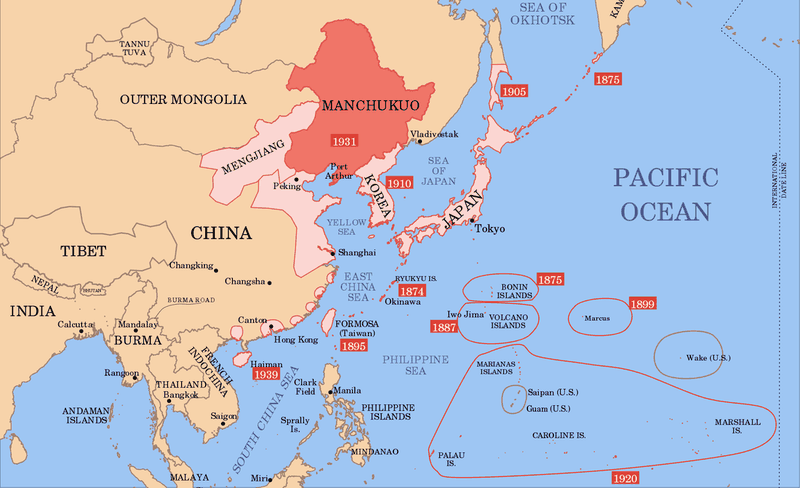
The Battle of the Coral Sea (May 1942)
Although technically a Japanese victory (they sank more ships that the US and Australian forces), they were prevented from invading Australia. Significantly, two Japanese aircraft carriers were damaged and were unable to participate at the Battle of Midway. Moreover, the Allies were able to seize back some of the initiative and launch a campaign on Guadalcanal in August 1942.
The Battle of Midway (June 1942)
One month later, both sides fought again near the island of Midway in June 1942. Many US historians believe that this battle was the turning point of the war in the Pacific. Midway was a minor US airbase in the middle of the Pacific Ocean and the pawn over which both sides tried to engage the other in a trap. The aim of the Japanese was to destroy what remained of the US Pacific Fleet by luring them into defending the base at Midway. To that end, the Japanese began a heavy bombardment of the island with some of their fleet and disperse the rest of his ships so that they could be sufficiently hidden in order to ambush the American fleet that would come to defend Midway.
Unknown to the Japanese, the Americans had been able to crack their naval code and therefore discovered their plans at Midway. Therefore, US Admiral Chester Nimitz appeared to send the US Pacific Fleet to defend Midway, while in reality sending reconnaissance aircraft to find the hidden Japanese ships. The entire battle hinged on 5 minutes when a US bomber squadron discovered the four Japanese aircraft carriers sent to ambush the US Pacific Fleet and attack. This attack led to the destruction of three of the four carriers with the fourth sunk the following day (the US only lost one of their three carriers). This was crucial as it amounted to half the Japanese carrier fleet. Aircraft carriers were the most significant weapon in the Pacific Theatre as they were essentially floating airfields in the world's largest body of war. Japanese wartime production could not replace these carriers whereas as the war progressed, the US could produce shipping quicker than it could be sunk.
Although technically a Japanese victory (they sank more ships that the US and Australian forces), they were prevented from invading Australia. Significantly, two Japanese aircraft carriers were damaged and were unable to participate at the Battle of Midway. Moreover, the Allies were able to seize back some of the initiative and launch a campaign on Guadalcanal in August 1942.
The Battle of Midway (June 1942)
One month later, both sides fought again near the island of Midway in June 1942. Many US historians believe that this battle was the turning point of the war in the Pacific. Midway was a minor US airbase in the middle of the Pacific Ocean and the pawn over which both sides tried to engage the other in a trap. The aim of the Japanese was to destroy what remained of the US Pacific Fleet by luring them into defending the base at Midway. To that end, the Japanese began a heavy bombardment of the island with some of their fleet and disperse the rest of his ships so that they could be sufficiently hidden in order to ambush the American fleet that would come to defend Midway.
Unknown to the Japanese, the Americans had been able to crack their naval code and therefore discovered their plans at Midway. Therefore, US Admiral Chester Nimitz appeared to send the US Pacific Fleet to defend Midway, while in reality sending reconnaissance aircraft to find the hidden Japanese ships. The entire battle hinged on 5 minutes when a US bomber squadron discovered the four Japanese aircraft carriers sent to ambush the US Pacific Fleet and attack. This attack led to the destruction of three of the four carriers with the fourth sunk the following day (the US only lost one of their three carriers). This was crucial as it amounted to half the Japanese carrier fleet. Aircraft carriers were the most significant weapon in the Pacific Theatre as they were essentially floating airfields in the world's largest body of war. Japanese wartime production could not replace these carriers whereas as the war progressed, the US could produce shipping quicker than it could be sunk.
The Battle of Guadalcanal (August 1942- February 1943)
In contrast many Japanese historians consider Guadalcanal to be the turning point of the war in the Pacific. This is because for the first time, the Japanese were defeated on land, at sea and in the air. American victory at Guadalcanal was hard fought and lasted 5 months. Further victories resulted in the Soloman Islands because the Japanese had committed so many troops to the defence of Guadalcanal bu t the US reconsidered their strategy with regard to engaging large Japanese garrisons who seemed determined to fight til the last man. The result was the island hopping strategy.
"The Japanese would just not surrender. At Guadalcanal, we surrounded the Japanese in the valleys. They were tough fighters...After we had surrounded them we used loud-speakers to try to get them to surrender. But they kept fighting. We had to go in the valleys and kill them. They would not surrender."
Anonymous US soldier speaking about Guadalcanal
The Battle of Leyte Gulf (October 1944)
In early 1944, US forces successfully captured the islands of Saipan and Guam which meant that they possessed airfields within range of the Japanese home islands for the first time. This naval engagement was the largest of the entire war and possibly in all history. The US victory meant that the liberation of the Philippines was now inevitable, leaving Japan cut off from their Southeast Asian territories. This was also the first time Japanese kamikaze attacks were used.
Operation Meetinghouse (March 1945)
This was the single most destructive bombing raid in history. Occuring over two nights, Tokyo was subjected to intense strategic (area) bombing that resulted in horrifically destructive firestorms. As much of Tokyo at that time consisted of old wooden housing, 15.8 square miles of the city were destroyed and roughly 100,000 civilians killed. More people died as result of the initial bombing than at Hiroshima and Nagasaki (where the death toll overtook Operation Meetinghouse as a result of radiation effects).
" Killing Japanese didn't bother me very much at that time... I suppose if I had lost the war, I would have been tried as a war criminal.... Every soldier thinks something of the moral aspects of what he is doing. But all war is immoral and if you let that bother you, you're not a good soldier."
Curtis LeMay, US Airforce General in charge of all strategic bombing operations against the Japanese home islands, speaking after the war
Iwo Jima and Okinawa (February 1945 and April-June 1945)
This were two of the fiercest battles of the entire Pacific campaign. Out of 22,000 Japanese soldiers based on Iwo Jima, only 216 were captured as the rest were killed. Total US casualties (killed and injured) on Iwo Jima actually exceeded the Japanese, although the number of Japanese deaths amounted to three times as many as the US. At Okinawa, Out of 80,000 Japanese troops and 40,000 Okinawan conscripts, only 7,000 were captured. Moreover, it has been estimated that between 42,000 and 150,000 Okinawan civilians were killed. In comparison, the US suffered roughly 14,000 deaths and 65,000 total casualties (out of an initial force of roughly 180,000). The intensity of these two battles, in particular the ultra-stubborn Japanese resistance, played a key part in the decision to drop the atomic bombs on Japan, although some historians believe both battles were Japanese attempts to persuade the USA to accept a condition surrender, preventing a foreign occupation of Japan.
In contrast many Japanese historians consider Guadalcanal to be the turning point of the war in the Pacific. This is because for the first time, the Japanese were defeated on land, at sea and in the air. American victory at Guadalcanal was hard fought and lasted 5 months. Further victories resulted in the Soloman Islands because the Japanese had committed so many troops to the defence of Guadalcanal bu t the US reconsidered their strategy with regard to engaging large Japanese garrisons who seemed determined to fight til the last man. The result was the island hopping strategy.
"The Japanese would just not surrender. At Guadalcanal, we surrounded the Japanese in the valleys. They were tough fighters...After we had surrounded them we used loud-speakers to try to get them to surrender. But they kept fighting. We had to go in the valleys and kill them. They would not surrender."
Anonymous US soldier speaking about Guadalcanal
The Battle of Leyte Gulf (October 1944)
In early 1944, US forces successfully captured the islands of Saipan and Guam which meant that they possessed airfields within range of the Japanese home islands for the first time. This naval engagement was the largest of the entire war and possibly in all history. The US victory meant that the liberation of the Philippines was now inevitable, leaving Japan cut off from their Southeast Asian territories. This was also the first time Japanese kamikaze attacks were used.
Operation Meetinghouse (March 1945)
This was the single most destructive bombing raid in history. Occuring over two nights, Tokyo was subjected to intense strategic (area) bombing that resulted in horrifically destructive firestorms. As much of Tokyo at that time consisted of old wooden housing, 15.8 square miles of the city were destroyed and roughly 100,000 civilians killed. More people died as result of the initial bombing than at Hiroshima and Nagasaki (where the death toll overtook Operation Meetinghouse as a result of radiation effects).
" Killing Japanese didn't bother me very much at that time... I suppose if I had lost the war, I would have been tried as a war criminal.... Every soldier thinks something of the moral aspects of what he is doing. But all war is immoral and if you let that bother you, you're not a good soldier."
Curtis LeMay, US Airforce General in charge of all strategic bombing operations against the Japanese home islands, speaking after the war
Iwo Jima and Okinawa (February 1945 and April-June 1945)
This were two of the fiercest battles of the entire Pacific campaign. Out of 22,000 Japanese soldiers based on Iwo Jima, only 216 were captured as the rest were killed. Total US casualties (killed and injured) on Iwo Jima actually exceeded the Japanese, although the number of Japanese deaths amounted to three times as many as the US. At Okinawa, Out of 80,000 Japanese troops and 40,000 Okinawan conscripts, only 7,000 were captured. Moreover, it has been estimated that between 42,000 and 150,000 Okinawan civilians were killed. In comparison, the US suffered roughly 14,000 deaths and 65,000 total casualties (out of an initial force of roughly 180,000). The intensity of these two battles, in particular the ultra-stubborn Japanese resistance, played a key part in the decision to drop the atomic bombs on Japan, although some historians believe both battles were Japanese attempts to persuade the USA to accept a condition surrender, preventing a foreign occupation of Japan.

The dropping of atomic bombs on Hiroshima and Nagasaki
This was the most controversial decision of the war and one of the most debated in history. See below for more details:
This was the most controversial decision of the war and one of the most debated in history. See below for more details:

| the_decision_to_drop_the_bomb.pptx |
Tactics
Blitzkrieg
Blitzkrieg translates into English as 'lightening warfare' and were the tactics adopted by the German military during WWII. These tactics overwhelmed opposing armies in the successful German conquests in Europe between 1939 and 1941. They were also extremely effective in the invasion of the USSR in 1941 (until Operation Barbarossa was halted in December). These tactics involved the coordination of tanks, aircraft and infantry units to initiate a rapid advance into enemy territory, usually resulting in the isolation and destruction of large numbers of the enemy. Superior tanks would outflank opposing forces and would be supported by the German Luftwaffe, who would act quickly to ensure air superiority. The aircraft would also bomb strategically important targets such as bridges and transportation hubs. Infantry would be advancing quickly behind the tanks and assist in encircling enemy troops in a pincer.
Island Hopping
Island hopping was devised after US forces encountered fierce Japanese resistance at Guadalcanal. Instead of engaging large Japanese garrisons all the way between the South Pacific and Japan, US forces would select strategically important islands and engage Japanese forces when they possessed a clear and significant numerical advantage and would 'skip over' the larger Japanese bases where possible. These larger garrisons would then be isolated by controlling the air and seas surrounding them, thereby depriving them of supplies. In the words of General Douglas MacArthur, these bases would be left to 'wither on the vine'.
Area bombing
Otherwise known as strategic bombing, this tactic involved intense bombing of an entire area, targetting industry and infrastructure in the first instance, although a secondary aim was to encourage civilians to put pressure on the German government. The first wave of attack would be to drop bombs that would damage buildings. This would be followed very quickly by a second wave that would drop incendiary bombs that often led to firestorms. In 1943 and 1944, Allied area bombing over Germany would often take place at night and from a higher altitude, in order to protect crews from German fighter aircraft and anti-aircraft guns. Therefore, the accuracy and efficiency of many of these bombing raids were limited. By 1945, sufficient technological advances had been made to supporting Allied fighter planes that ensured greater air supremacy and therefore allowed daytime bombing to occur. As such, this improved the efficiency of the raids. This tactic remained very controversial due to the targeting of civilian areas and occured in both the European and Pacific Theatres. Many believed that the proponents of such tactics such as Curtis LeMay and Arthur "Bomber" Harris were guilty of war crimes.
Blitzkrieg
Blitzkrieg translates into English as 'lightening warfare' and were the tactics adopted by the German military during WWII. These tactics overwhelmed opposing armies in the successful German conquests in Europe between 1939 and 1941. They were also extremely effective in the invasion of the USSR in 1941 (until Operation Barbarossa was halted in December). These tactics involved the coordination of tanks, aircraft and infantry units to initiate a rapid advance into enemy territory, usually resulting in the isolation and destruction of large numbers of the enemy. Superior tanks would outflank opposing forces and would be supported by the German Luftwaffe, who would act quickly to ensure air superiority. The aircraft would also bomb strategically important targets such as bridges and transportation hubs. Infantry would be advancing quickly behind the tanks and assist in encircling enemy troops in a pincer.
Island Hopping
Island hopping was devised after US forces encountered fierce Japanese resistance at Guadalcanal. Instead of engaging large Japanese garrisons all the way between the South Pacific and Japan, US forces would select strategically important islands and engage Japanese forces when they possessed a clear and significant numerical advantage and would 'skip over' the larger Japanese bases where possible. These larger garrisons would then be isolated by controlling the air and seas surrounding them, thereby depriving them of supplies. In the words of General Douglas MacArthur, these bases would be left to 'wither on the vine'.
Area bombing
Otherwise known as strategic bombing, this tactic involved intense bombing of an entire area, targetting industry and infrastructure in the first instance, although a secondary aim was to encourage civilians to put pressure on the German government. The first wave of attack would be to drop bombs that would damage buildings. This would be followed very quickly by a second wave that would drop incendiary bombs that often led to firestorms. In 1943 and 1944, Allied area bombing over Germany would often take place at night and from a higher altitude, in order to protect crews from German fighter aircraft and anti-aircraft guns. Therefore, the accuracy and efficiency of many of these bombing raids were limited. By 1945, sufficient technological advances had been made to supporting Allied fighter planes that ensured greater air supremacy and therefore allowed daytime bombing to occur. As such, this improved the efficiency of the raids. This tactic remained very controversial due to the targeting of civilian areas and occured in both the European and Pacific Theatres. Many believed that the proponents of such tactics such as Curtis LeMay and Arthur "Bomber" Harris were guilty of war crimes.